Behind the Behaviour
If you feel like your child’s behaviour is confusing, unpredictable, or escalating — this is exactly where you start.
For years, I have worked with children whose behaviour was described as “challenging,” “defiant,” “oppositional,” or “explosive.”
And for years, I have watched adults respond in one of two extremes:
Too rigid.
Or too gentle.
What I rarely saw was balance.
The truth is, behaviour is rarely random. It communicates something. But understanding behaviour does not mean excusing it. And maintaining boundaries does not mean abandoning compassion.
That tension is exactly why I created the Behind the Behaviour™ Toolkit.
Where This Framework Comes From
This toolkit was not created from theory alone.
It was shaped by:
Formal training in Intensive Behavioural Intervention (IBI) and Applied Behaviour Analysis (ABA)
Seven years working in Regional Autism Services
Eleven years in a school setting supporting students with complex behavioural and special education needs
Experience working with children from preschool through high school
Respite work supporting families navigating neurodivergence
I have also been influenced by literature such as The Whole-Brain Child, The Explosive Child, and structured regulation programs like The Zones of Regulation.
But beyond professional training, this framework was refined in my own home.
As a mother with ADHD raising a strong-willed neurodivergent child, I learned firsthand that compassion without structure can unintentionally increase anxiety and escalation. For a long time, I confused gentleness with removing boundaries. I paid for that misunderstanding for years.
What I eventually learned — both professionally and personally — is this:
Children do not thrive in chaos. They thrive in clarity.
If you’re feeling overwhelmed trying to figure out what’s driving your child’s behaviour, this toolkit was created to give you clarity.
The Behind the Behaviour™ Toolkit walks you step-by-step from confusion to a clear, structured plan.
✔ Track behaviour patterns
✔ Identify what’s really going on
✔ Build a plan you can actually follow
What I Believe About Behaviour
I believe:
Behaviour communicates a need, skill gap, or function.
Skill-building reduces behaviour more effectively than punishment.
Removing expectations to avoid escalation creates long-term instability.
Clear, predictable boundaries actually reduce anxiety.
Authority and warmth can — and must — coexist.
Not authoritarian.
Not permissive.
Authoritative — with grace and consistency.
When adults adjust the environment, explicitly teach missing skills, and hold expectations calmly, children experience greater predictability and less internal stress.
That belief system is embedded in every page of this toolkit.
Why I Built a Data-Driven System
One of the biggest mistakes I see in both homes and schools is reacting to isolated incidents.
We respond emotionally.
We remove demands.
We lecture.
We escalate.
But without data, we are guessing.
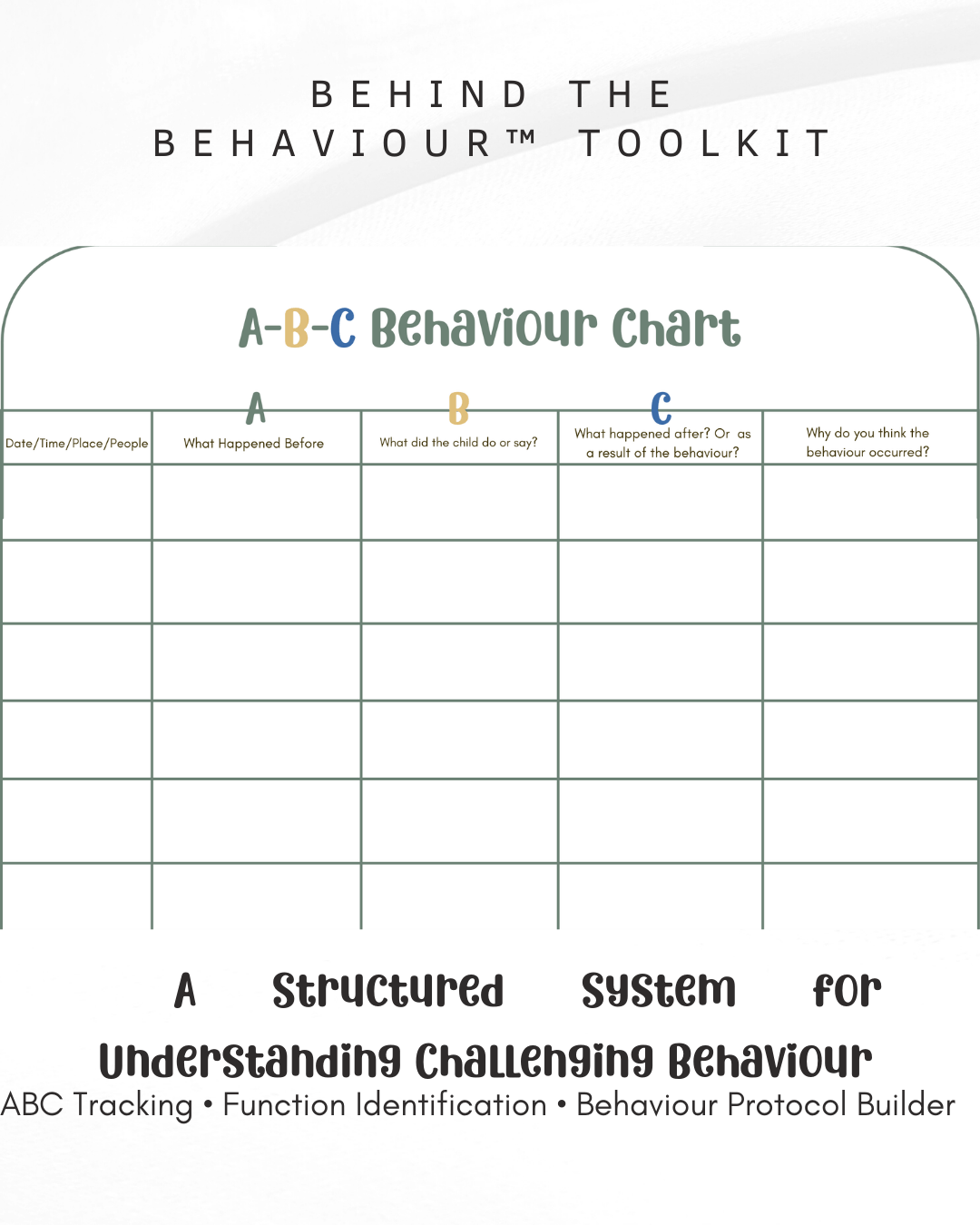
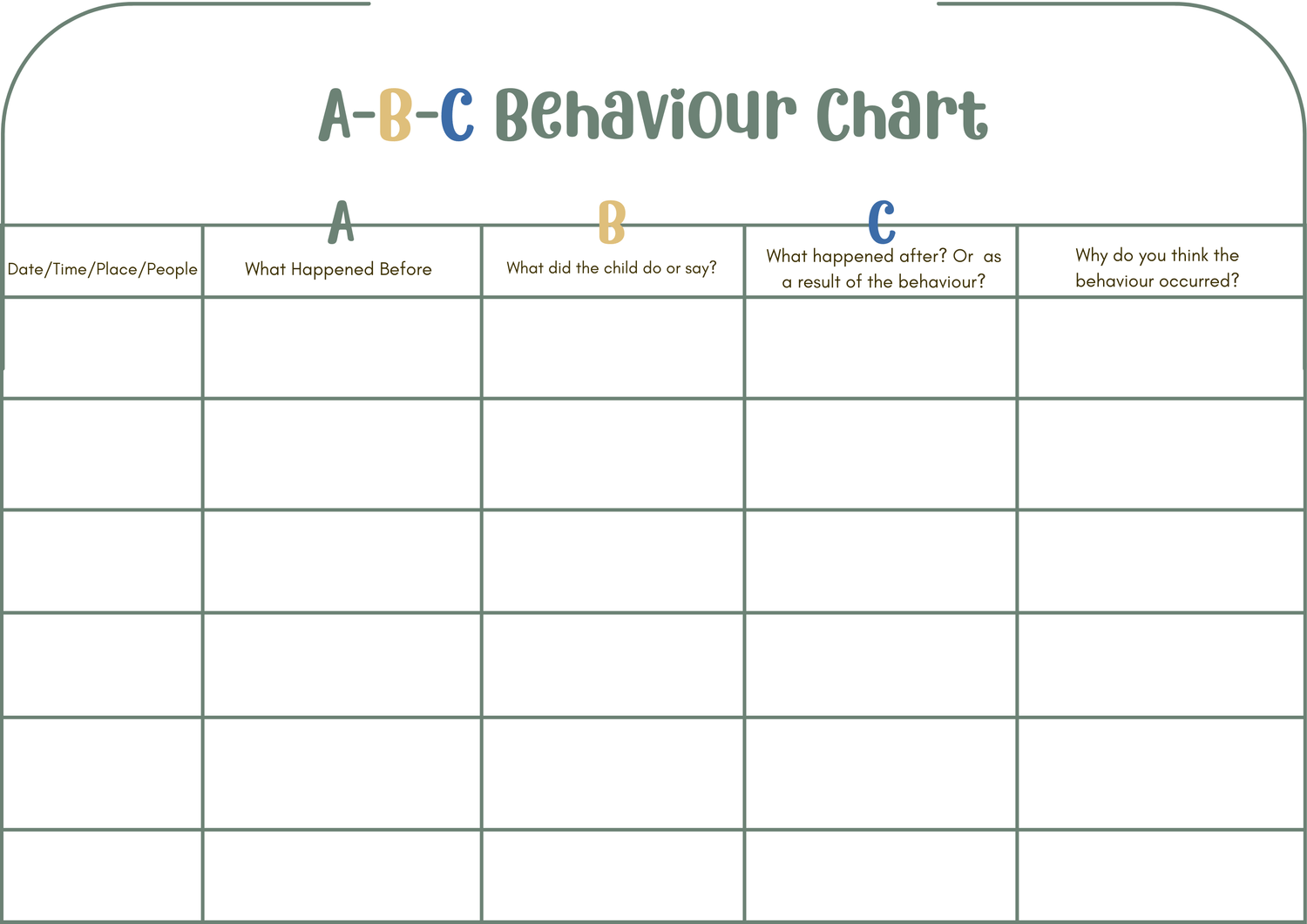
The ABC (Antecedent–Behaviour–Consequence) framework is simple, but powerful. It shifts adults from reacting to observing. From assuming to analyzing.
The Behind the Behaviour™ Toolkit walks adults through:
Tracking behaviour objectively
Identifying patterns
Forming a working hypothesis
Building a structured behaviour protocol
Implementing consistently
Reviewing and adjusting based on evidence
It moves from chaos to clarity.
Who This Toolkit Is For
I created this for:
Parents and Caregivers
Classroom teachers and Support staff
Resource Teachers and School admin
Parents raising strong-willed, defiant and/or neurodivergent children
It is for adults who:
Value data over assumptions
Believe behaviour is communication
Want structure without harshness
Want compassion without surrendering expectations
What Makes This Different
This is not a sticker chart.
It is not permissive parenting language.
It is not rigid compliance training.
It is a structured, safety-first, skill-building system grounded in:
Behavioural science
Educational experience
Neurodevelopmental understanding
Real-life parenting humility
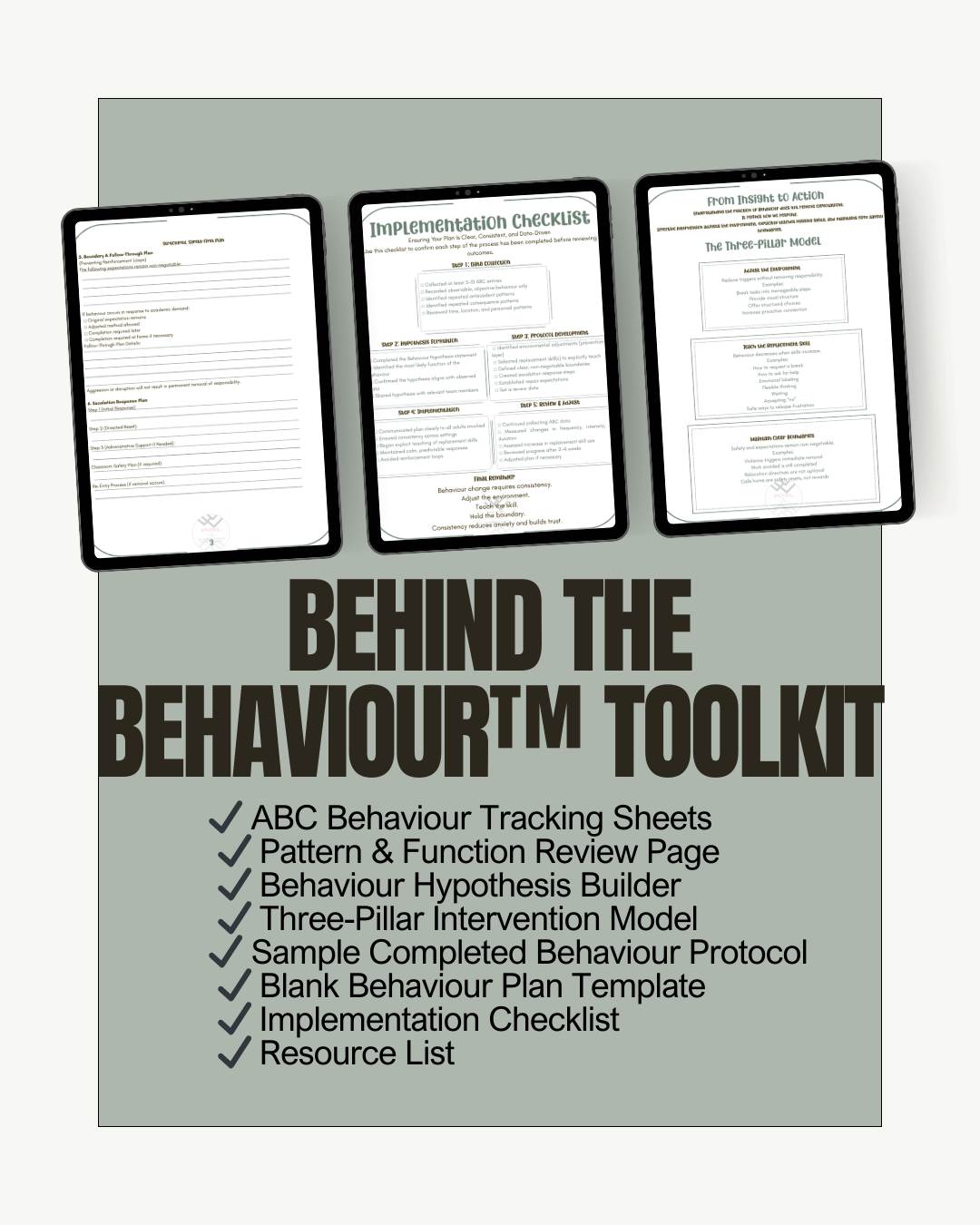
It includes:
ABC data tracking sheets
Pattern review tables
Hypothesis formation tools
A three-pillar intervention model
A sample completed behaviour protocol
A blank protocol template
An implementation checklist
Curated resource recommendations
It is designed to move adults and our children from confusion to clarity.
The Heart Behind It
If I could summarize this entire toolkit in one statement, it would be this:
Support without surrendering standards.
Children need understanding.
Children need skill-building.
Children need strong, predictable boundaries.
When those three exist together, behaviour stabilizes — not because we forced it, but because we taught and structured it.
That is the heart behind Behind the Behaviour™.

The Hard Truth That Shaped This Toolkit
There is another reason this toolkit exists — and it’s more personal.
For many years, I leaned heavily into what I understood as “gentle parenting.” I was a single mom. I was exhausted. I carried guilt. And both my daughter and I have ADHD.
Our home was chaos.
My daughter is strong-willed. Bright. Determined. Intense. And when those traits combined with ADHD and oppositional tendencies, I often felt completely overwhelmed.
Instead of building structure, I softened it.
Instead of holding boundaries consistently, I avoided conflict.
Instead of calmly maintaining expectations, I parented out of guilt and fear of “being too hard.”
The result wasn’t peace.
It was instability.
And the hardest part to admit is this: my lack of clear, consistent boundaries didn’t protect her — it hurt her.
Children with strong personalities and ADHD don’t need less structure. They need more clarity. More predictability. More follow-through.
When I allowed her to “run the show,” it didn’t empower her. It increased her anxiety. It made our relationship reactive. It left both of us exhausted and frustrated.
I often felt helpless.
And she often felt dysregulated.
I wish I had understood then what I understand now: compassion and boundaries are not opposites.
Structure is not harshness.
High expectations, delivered calmly and consistently, are one of the greatest gifts we can give a child.
My daughter is older now. We still have struggles. Growth is ongoing. But if I could go back, I would absolutely use the kind of structured, data-informed, balanced strategies that I’ve built into this toolkit.
That regret is not something I share lightly.
I share it because I don’t want other parents — especially overwhelmed, neurodivergent, guilt-carrying parents — to confuse gentleness with the absence of structure.
Children thrive when adults are steady.
This toolkit is the steady framework I wish I had used earlier. My prayer is that this toolkit helps even one child feel safer and more understood, and equips one parent, educator, or caregiver with the clarity and confidence to guide them toward thriving.
Ready to Start?
Explore the Behind the Behaviour™ Toolkit and start building a clear, structured plan today.